Edexcel 2021 Further Maths 9fm0/02
35 questions75 marks90Updated November 2025
The Edexcel 2021 Further Maths 9fm0/02 paper in full: all 35 questions, each with its answer. Edexcel is the Pearson Edexcel. Sit it cold under exam timing, mark it, then work back through anything you missed using the solutions below.
Download the original PDF →Questions and answers are free. Full step-by-step worked solutions unlock with a free account. Start practising.
Question
2 markswrite down the exact value of
Question
Question
arg()
Question
Given that and that arg() = 0, where
determine
determine
Question
the smallest positive value of
Question
3 marksthe corresponding value of
Question
4 marksDetermine the first two non-zero terms, in ascending powers of , of the Maclaurin
series for , giving each coefficient in its simplest form.
series for , giving each coefficient in its simplest form.
Question
2 marksSubstitute into the answer to part (a) and hence find an approximate value for
Give your answer in the form where and are integers to be determined.
Give your answer in the form where and are integers to be determined.
Question
5 marksShow that the sum of the cubes of the first positive odd numbers is
Question
4 marksThe sum of the cubes of 10 consecutive positive odd numbers is 99800
Use the answer to part (a) to determine the smallest of these 10 consecutive positive
odd numbers.
Use the answer to part (a) to determine the smallest of these 10 consecutive positive
odd numbers.
Question
3 marksShow that has no stationary points.
Question
5 marksThe normal to , at the point where , crosses the -axis at the point and crosses
the -axis at the point .
Given that is the origin,
show that the area of the triangle is where , and
are integers to be determined.
the -axis at the point .
Given that is the origin,
show that the area of the triangle is where , and
are integers to be determined.
Question
5 marksShow that the range of possible values for is
Question
1 markSketch the curve with equation
where
where
Question
7 marksJohn digs a hole in his garden in order to make a pond.
The pond has a uniform horizontal cross section that is modelled by the curve with equation
where is measured in centimetres.
The depth of the pond is 90 centimetres.
Water flows through a hosepipe into the pond at a rate of 50 litres per minute.
Given that the pond is initially empty,
determine how long it will take to completely fill the pond with water using the
hosepipe, according to the model. Give your answer to the nearest minute.
Question
1 markState a limitation of the model.
Question
3 marksshow that
Question
6 marksThe finite region , shown shaded in Figure 1, is bounded by the curve with equation
, the -axis and the line with equation
The region is rotated through radians about the -axis.
Use calculus to find the exact value of the volume of the solid generated.
, the -axis and the line with equation
The region is rotated through radians about the -axis.
Use calculus to find the exact value of the volume of the solid generated.
Question
5 marksThe point is one vertex of a regular pentagon in an Argand diagram.
The centre of the pentagon is at the origin.
Given that represents the complex number , determine the complex
numbers that represent the other vertices of the pentagon, giving your answers in the
form
The centre of the pentagon is at the origin.
Given that represents the complex number , determine the complex
numbers that represent the other vertices of the pentagon, giving your answers in the
form
Question
Not specified
Question
2 marksOn a single Argand diagram, shade the region, , that satisfies both
and
and
Question
4 marksDetermine the exact area of , giving your answer in simplest form.
Question
1 markGiven that , write down the sum of the infinite series
Question
Given that ,
Question
5 marksuse the answer to part (a), and de Moivre's theorem or otherwise, to prove that
Question
2 marksshow that the sum of the infinite series cannot be purely
imaginary, giving a reason for your answer.
imaginary, giving a reason for your answer.
Question 1
Given that
Question 2
5 marksThe matrix represents the linear transformation M.
Prove that, for the linear transformation M, there are no invariant lines.
Prove that, for the linear transformation M, there are no invariant lines.
Question 3
Question 4
In this question you may assume the results for
, and
, and
Question 5
The curve has equation
Question 6
The curve has equation
where and are positive constants and
There are exactly four points on where the tangent is perpendicular to the initial line.
where and are positive constants and
There are exactly four points on where the tangent is perpendicular to the initial line.
Question 7
Solutions based entirely on graphical or numerical methods are not acceptable.
Figure 1 shows a sketch of part of the curve with equation
and the straight line with equation
The line and the curve intersect at the point with coordinates
Given that
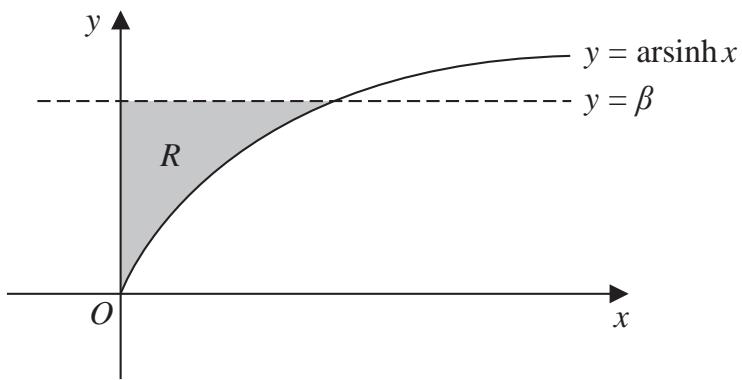
Figure 1 shows a sketch of part of the curve with equation
and the straight line with equation
The line and the curve intersect at the point with coordinates
Given that
Question 8
Not specified
Question 9
Not specified