Edexcel 2019 Mathematics 9ma0/02
46 questions100 marks120Updated October 2025
The Edexcel 2019 Mathematics 9ma0/02 paper in full: all 46 questions, each with its answer. Edexcel is the Pearson Edexcel. Sit it cold under exam timing, mark it, then work back through anything you missed using the solutions below.
Download the original PDF →Questions and answers are free. Full step-by-step worked solutions unlock with a free account. Start practising.
Question
3 marks(a) estimate the length of runway used by the jet to take off.
Question
1 markGiven that the jet accelerated smoothly in these 25 seconds,
(b) explain whether your answer to part (a) is an underestimate or an overestimate of the
length of runway used by the jet to take off.
(b) explain whether your answer to part (a) is an underestimate or an overestimate of the
length of runway used by the jet to take off.
Question
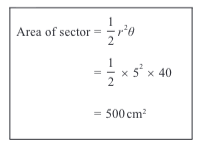
1 markExplain the error made by this student.
Question
2 marksWrite out a correct solution.
Question
2 marks(a) Find the value of gg(0).
Question
4 marks(b) Find all values of x for which
Question
1 markThe function h is defined by
(c) Explain why h has an inverse but g does not.
(c) Explain why h has an inverse but g does not.
Question
3 marks(d) Solve the equation
Question
1 mark(a) Write down a general equation linking y with x, for this model.
Question
3 marksThe bars of soap are sold for each.
On a day when 800 bars of soap are made and sold, the factory makes a profit of
On a day when 300 bars of soap are made and sold, the factory makes a loss of
Using the above information,
(b) show that
On a day when 800 bars of soap are made and sold, the factory makes a profit of
On a day when 300 bars of soap are made and sold, the factory makes a loss of
Using the above information,
(b) show that
Question
1 mark(c) With reference to the model, interpret the significance of the value 0.84 in the equation.
Question
2 marksAssuming that each bar of soap is sold on the day it is made,
(d) find the least number of bars of soap that must be made on any given day for the
factory to make a profit that day.
(d) find the least number of bars of soap that must be made on any given day for the
factory to make a profit that day.
Question
3 marksFind the value of
Question
3 marksShow that
Question
3 marks(a) Explain how Figure 6 would lead the engineer to believe that the braking distance
should be modelled by the formula
where k and n are constants
with
should be modelled by the formula
where k and n are constants
with
Question
3 marksUsing the information given in Figure 5, with
(b) find a complete equation for the model giving the value of n to 3 significant figures.
(b) find a complete equation for the model giving the value of n to 3 significant figures.
Question
3 marksSean is driving this car at in wet conditions when he notices a large puddle in
the road 100 m ahead. It takes him 0.8 seconds to react before applying the brakes.
(c) Use your formula to find out if Sean will be able to stop before reaching the puddle.
the road 100 m ahead. It takes him 0.8 seconds to react before applying the brakes.
(c) Use your formula to find out if Sean will be able to stop before reaching the puddle.
Question
2 marks(a) Find in terms of and
Question
2 marks(b) Show that , where is a scalar constant.
Question
2 marks(c) Hence prove that ON:NB = 2:1
Question
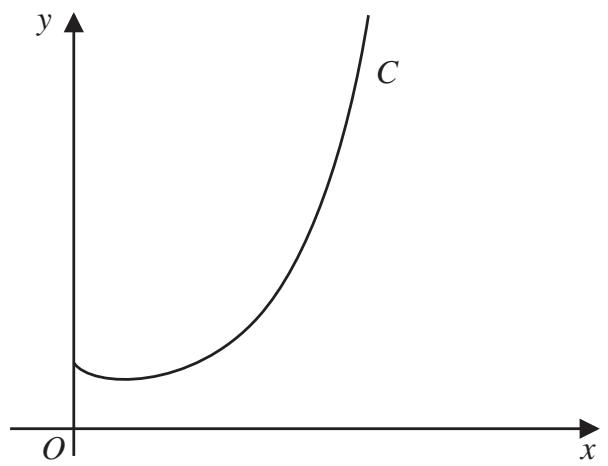
5 marks(a) Find, by firstly taking logarithms, the x coordinate of the turning point of C.
(Solutions based entirely on graphical or numerical methods are not acceptable.)
(Solutions based entirely on graphical or numerical methods are not acceptable.)
Question
2 marksThe point P(a, 2) lies on C.
(b) Show that
(b) Show that
Question
2 marksA possible iteration formula that could be used in an attempt to find a is
Using this formula with
(c) find to 3 decimal places,
Using this formula with
(c) find to 3 decimal places,
Question
2 marks(d) describe the long-term behaviour of
Question
4 marks(a) Prove
,
,
Question
3 marks(b) Hence solve, for , the equation
giving any solutions to one decimal place.
giving any solutions to one decimal place.
Question
4 marks(a) Show that, according to the model, the surface area of the tank, in m², is given by
Question
4 marksThe manufacturer needs to minimise the surface area of the tank.
(b) Use calculus to find the radius of the tank for which the surface area is a minimum.
(b) Use calculus to find the radius of the tank for which the surface area is a minimum.
Question
2 marks(c) Calculate the minimum surface area of the tank, giving your answer to the nearest integer.
Question
6 marks(a) Use the substitution to show that
where k is a constant
where k is a constant
Question
2 marksA team of scientists is studying a species of slow growing tree.
The rate of change in height of a tree in this species is modelled by the differential equation
where h is the height in metres and t is the time, measured in years, after the tree is planted.
(b) Find, according to the model, the range in heights of trees in this species.
The rate of change in height of a tree in this species is modelled by the differential equation
where h is the height in metres and t is the time, measured in years, after the tree is planted.
(b) Find, according to the model, the range in heights of trees in this species.
Question
7 marksOne of these trees is one metre high when it is first planted.
According to the model,
(c) calculate the time this tree would take to reach a height of 12 metres, giving your
answer to 3 significant figures.
According to the model,
(c) calculate the time this tree would take to reach a height of 12 metres, giving your
answer to 3 significant figures.
Question 1
3 marksGiven
express y as a function of x.
express y as a function of x.
Question 2
The speed of a small jet aircraft was measured every 5 seconds, starting from the time it
turned onto a runway, until the time when it left the ground.
The results are given in the table below with the time in seconds and the speed in ms.

Using all of this information,
turned onto a runway, until the time when it left the ground.
The results are given in the table below with the time in seconds and the speed in ms.
Using all of this information,
Question 3
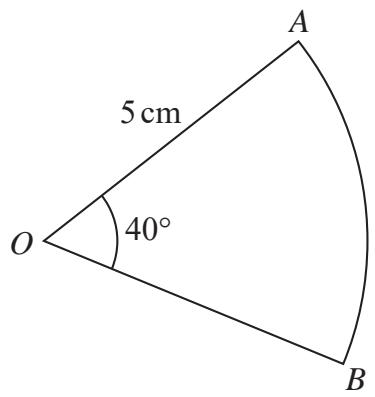
Figure 1 shows a sector AOB of a circle with centre O, radius 5 cm and angle AOB = 40°
The attempt of a student to find the area of the sector is shown below.
Question 4
6 marksThe curve C₁ with parametric equations
,
,
meets the circle C₂ with equation
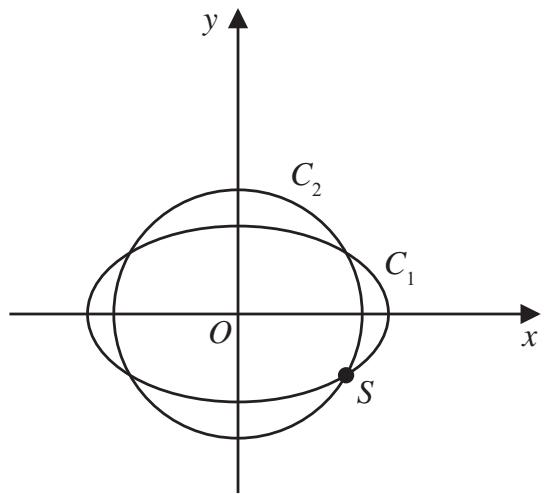
at four distinct points as shown in Figure 2.
Given that one of these points, S, lies in the 4th quadrant, find the Cartesian coordinates of S.
,
,
meets the circle C₂ with equation
at four distinct points as shown in Figure 2.
Given that one of these points, S, lies in the 4th quadrant, find the Cartesian coordinates of S.
Question 5
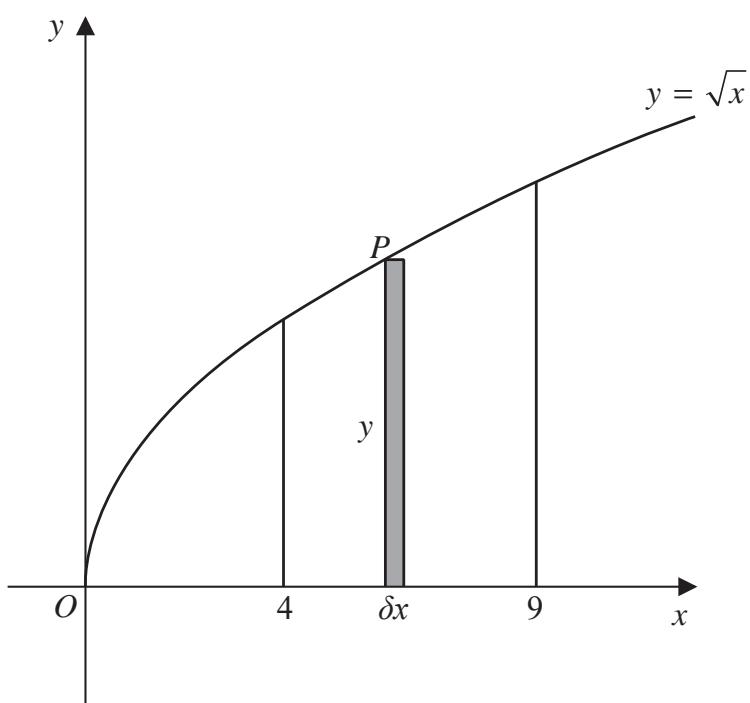
3 marksFigure 3 shows a sketch of the curve with equation
The point P(x, y) lies on the curve.
The rectangle, shown shaded on Figure 3, has height y and width .
Calculate
The point P(x, y) lies on the curve.
The rectangle, shown shaded on Figure 3, has height y and width .
Calculate
Question 6
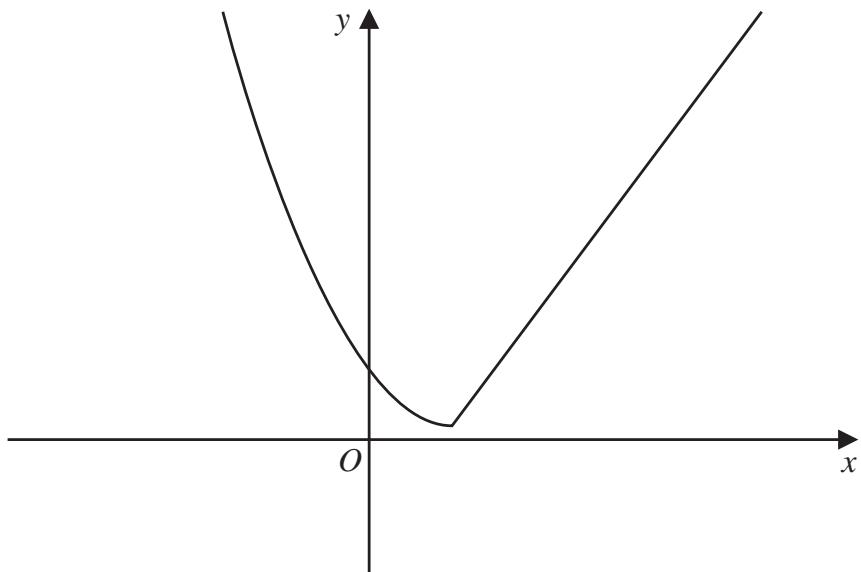
Figure 4 shows a sketch of the graph of , where
Question 7
A small factory makes bars of soap.
On any day, the total cost to the factory, , of making x bars of soap is modelled to be
the sum of two separate elements:
• a fixed cost
• a cost that is proportional to the number of bars of soap that are made that day
On any day, the total cost to the factory, , of making x bars of soap is modelled to be
the sum of two separate elements:
• a fixed cost
• a cost that is proportional to the number of bars of soap that are made that day
Question 8
Question 9
A research engineer is testing the effectiveness of the braking system of a car when it is
driven in wet conditions.
The engineer measures and records the braking distance, d metres, when the brakes are
applied from a speed of .
Graphs of d against V and against were plotted.
The results are shown below together with a data point from each graph.
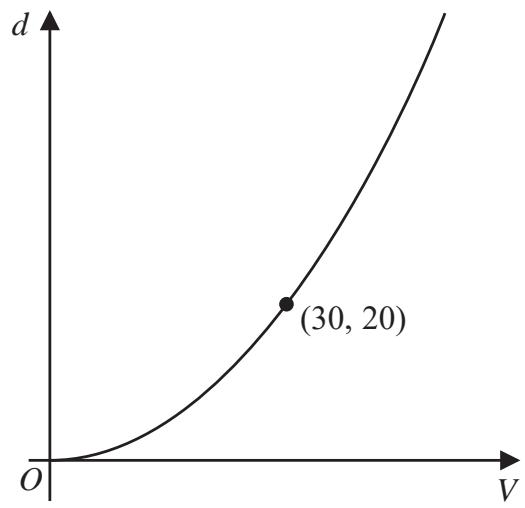
Figure 5
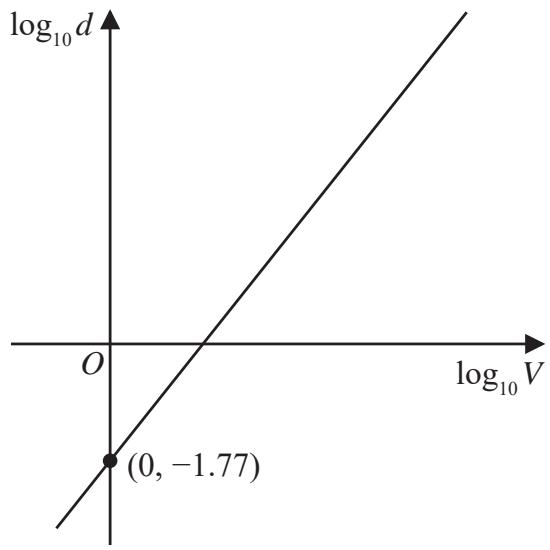
Figure 6
driven in wet conditions.
The engineer measures and records the braking distance, d metres, when the brakes are
applied from a speed of .
Graphs of d against V and against were plotted.
The results are shown below together with a data point from each graph.
Figure 5
Figure 6
Question 10
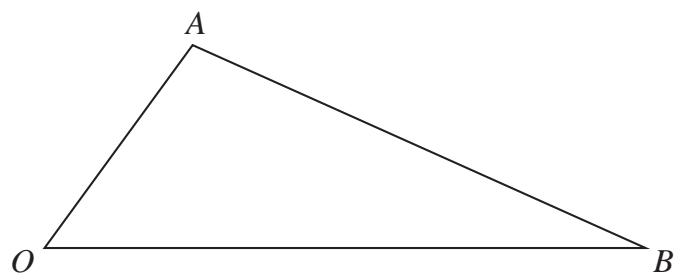
Figure 7 shows a sketch of triangle OAB.
The point C is such that .
The point M is the midpoint of AB.
The straight line through C and M cuts OB at the point N.
Given and
The point C is such that .
The point M is the midpoint of AB.
The straight line through C and M cuts OB at the point N.
Given and
Question 11
Figure 8 shows a sketch of the curve C with equation ,
Question 12
Not specified
Question 13
(A sphere of radius r has volume and surface area )
A manufacturer produces a storage tank.
The tank is modelled in the shape of a hollow circular cylinder closed at one end with a
hemispherical shell at the other end as shown in Figure 9.
The walls of the tank are assumed to have negligible thickness.
The cylinder has radius r metres and height h metres and the hemisphere has radius r metres.
The volume of the tank is 6 m.
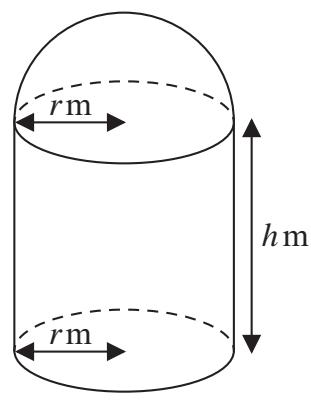
A manufacturer produces a storage tank.
The tank is modelled in the shape of a hollow circular cylinder closed at one end with a
hemispherical shell at the other end as shown in Figure 9.
The walls of the tank are assumed to have negligible thickness.
The cylinder has radius r metres and height h metres and the hemisphere has radius r metres.
The volume of the tank is 6 m.